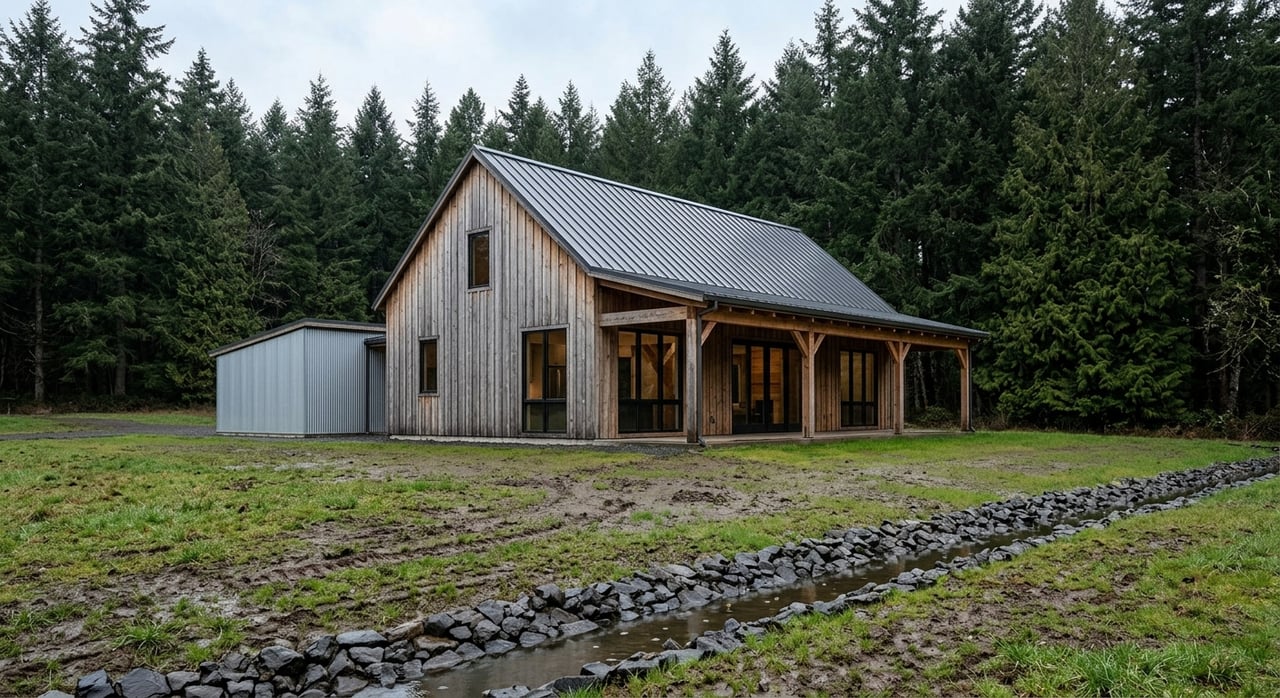
What draws so many buyers to Tillamook County is not just the coastline. It is the way pasture, timber, bays, and working land all exist in the same market, often on the same property. If you are thinking about owning coastal timber and pastureland here, you need more than a pretty view and a parcel map. You need to understand how zoning, tax status, septic, and hazard overlays shape what the land can realistically do for you. Let’s dive in.
Why Tillamook County fits mixed land ownership
Tillamook County has a land market that is deeply tied to resource use. The county’s zoning framework includes Farm, Forest, Small Farm and Woodlot, Rural Residential, and several coastal and hazard overlays. That means one listing may function very differently from another, even if both look similar online.
This is one reason Tillamook County appeals to buyers who want more than a standard rural homesite. You can find working farms, managed timberland, mixed-resource tracts, and smaller residential-focused acreage across the county. In practical terms, you are shopping within a land-use system, not just a scenery-driven coastal market.
The county’s planning documents also explain why the landscape feels so distinct. Tillamook County has long been shaped by a dairy-centered agricultural economy supported by a cool marine climate and a long pasture season. Historical planning materials describe more than 30,000 acres of hay and pasture land as part of that foundation, which helps explain the familiar mix of open ground, drainage bottoms, and wooded uplands.
Key Tillamook County zones
Farm zone basics
The F-1 Farm zone is meant to protect and maintain agricultural land. It also allows compatible uses and supports farm-use valuation for qualifying properties. If you are looking at pasture ground, livestock use, or a true working farm setup, this zone often becomes central to the conversation.
The Farm zone is not limited to crops alone. County code recognizes agricultural uses alongside compatible uses and notes the importance of protecting forests and habitat as part of the broader landscape. That matters if you are evaluating a parcel with both grazing ground and timbered areas.
Forest zone basics
The F Forest zone is designed to protect and maintain forest lands. It also allows grazing, rangeland use, and forest use while recognizing scenic resources and habitat. For buyers interested in timber value with some agricultural compatibility, this zone can be a strong fit.
This is an important point in Tillamook County. Forest land here is not always a single-purpose asset. Depending on the property, you may be looking at a working landscape that supports timber management while still accommodating compatible open-ground use.
SFW-20 for mixed tracts
SFW-20, or Small Farm and Woodlot, often makes the most sense for smaller mixed-resource properties. The county says this zone is meant for land with resource value that is not well suited for larger farm or forest zoning because of parcel size, nearby conflicting uses, physical constraints, or similar limitations.
For many buyers, this is the zone worth watching closely. The county states that uses allowed in the Farm and Forest zones are also permitted in SFW-20. If you are drawn to a smaller parcel with timber, some pasture, and a rural living component, this classification may be the clearest fit.
Rural Residential expectations
RR zones are intended for small-acreage residential homesites where the land has limited value for farm or forest use. If your goal is mainly a home with some elbow room, rather than a serious resource property, Rural Residential zoning may align better with your plans.
That distinction matters because Tillamook County’s planning documents caution that F-1 and SFW-20 are not ideal for hobby-farm use when the owner’s main vocation is not commercial agriculture. The county indicates that those buyers are often better matched to SFW-10 or Rural Residential areas. If you want animals, a garden, and some trees without operating a true farm business, that is a useful reality check.
Can one parcel support timber and pasture?
In many cases, yes. Tillamook County code explicitly allows compatible farm and forest uses within Farm, Forest, and mixed-resource classifications such as SFW-20. That flexibility is one reason the county is such a natural fit for mixed timber-and-pasture ownership.
Still, you should not assume every parcel will function the same way. The base zone is only part of the picture. Parcel size, terrain, access, adjacent uses, and overlay restrictions can all affect how the land can be managed.
From a buyer’s perspective, the best approach is to think in terms of fit. A property may look like it should work for cattle, hay, timber, and a homesite, but the legal and physical realities may point to a narrower use profile. Matching your goals to the actual zoning and site conditions is where good land buying starts.
Due diligence that matters before closing
Verify special-assessment status
One of the most important questions in Tillamook County is whether the property is in a special-assessment program for farm or forest use. Tillamook County states that actively managed properties can receive special assessment on land used primarily for farm and forest purposes. The Oregon Department of Revenue also says qualifying forestland may receive reduced property-tax assessment through the Forestland Program.
For designated forestland, the state says the tract must generally be at least two contiguous acres, and disqualification can trigger additional tax based on the difference between prior tax paid and what would have been owed at market value for the previous five years. The practical takeaway is simple: do not assume current tax treatment will stay the same if you change the use, divide the property, or stop active management.
Before closing, verify the assessor record and ask how the current use aligns with the property’s tax status. On land like this, the tax story is part of the property story.
Check septic and soils early
For rural homes and buildable homesites, septic and soils can matter just as much as zoning. Tillamook County states that its on-site sanitation division administers septic requirements under state mandate, and that system type depends on soils and site conditions verified by test pits.
The county also publishes setbacks for septic components relative to wells, groundwater supplies, streams, slopes, and property lines. In other words, rural buildability is often a site-conditions question, not just a zoning question. If you are buying with plans to build, expand, or replace a dwelling, this should be part of your early due diligence, not a last-minute box to check.
Review flood and tsunami overlays
On the coast, overlays can change the whole picture. Tillamook County’s land-use system includes flood-hazard and tsunami-hazard overlays, along with shoreland, beach-and-dune, estuary, and recreation-related designations.
A parcel with water views or coastal access may still face additional review if it lies in a mapped hazard area. The county says its flood-hazard regulations are intended to reduce public and private losses from flood conditions and erosion hazards, while its tsunami overlay relies on DOGAMI inundation maps for the largest local-source tsunami event. If you are evaluating land near bays, rivers, or the shoreline, these overlays deserve close attention.
Don’t overlook landslide risk
Landslide hazard is a serious issue in Tillamook County. DOGAMI reports that the county has experienced hundreds of landslides over the past 50 years. County hazard policies also identify high- and moderate-susceptibility landslide areas, debris-flow fans, steep slopes, and oceanfront lands as subject to special review.
This is especially relevant if you are drawn to bluff properties, headlands, or steep forested terrain. The county’s policies state that development should not be allowed in active sliding areas. If the appeal of the property is tied to elevation and views, geologic caution should be part of your buying process from the start.
Lifestyle appeal beyond the parcel lines
Owning land in Tillamook County is often about access as much as acreage. The county combines dairy pasture, private timber, bayside flats, and coast-range recreation within one local market. That mix gives the area a very different feel from a typical coastal second-home search.
For recreation-minded buyers, nearby forest access is a real draw. The Oregon Department of Forestry says Oregon state forests offer camping, trails, day-use areas, wildlife viewing, hunting, fishing, and other recreation. Tillamook State Forest and nearby state forest recreation areas add to the appeal for buyers who want working-land character with outdoor use close at hand.
Coastal parks deepen that draw. Cape Lookout State Park and Nehalem Bay State Park highlight the county’s close relationship between ocean, bay, and inland recreation. For many owners, the value is not just in what sits inside the property boundaries, but in how quickly you can move from timber edge to pasture, bay, beach, or trail.
What smart buyers focus on first
If you are serious about buying coastal timber and pastureland in Tillamook County, start with a clear checklist:
- Confirm the base zone and any overlay zones
- Verify farm or forest special-assessment status
- Review whether current use matches tax-program requirements
- Evaluate septic feasibility and soils if a homesite matters
- Check flood, tsunami, erosion, and landslide concerns
- Compare the property’s physical layout to your actual use goals
That process may sound technical, but it protects you from buying land based on assumptions. In a county with this much variation, careful due diligence is not a hurdle. It is how you find a property that truly fits your plans.
Whether you are looking for a working tract, a stewardship-minded retreat, or a mixed-use rural property, Tillamook County offers a rare blend of pasture, timber, and coastal access. If you want help sorting through zoning, land-use fit, and property risk before you make a move, David Brinker brings a land-focused, practical approach to buying in western Oregon.
FAQs
What zoning should you look for in Tillamook County timber and pastureland?
- Farm, Forest, and SFW-20 zones are often the most relevant for mixed timber and pasture use, while Rural Residential is generally more homesite-focused.
Can a Tillamook County property have both cattle and timber uses?
- Often yes, because county code allows compatible farm and forest uses in Farm, Forest, and SFW-20 zones, but each parcel still needs case-by-case review.
Does special farm or forest tax status stay the same after you buy?
- Not always. Special assessment depends on qualifying use, and disqualification can lead to additional tax, so you should verify assessor records before closing.
Is a coastal view parcel in Tillamook County easier to build on?
- No. Flood, tsunami, landslide, erosion, soils, and septic constraints can be more important than the view itself.
Why do septic and soils matter for rural land in Tillamook County?
- The county says septic system type depends on soils and site conditions verified by test pits, so buildability often depends on more than zoning alone.