If you own timberland in Douglas County, you may wonder whether a traditional list-and-negotiate sale is really the best fit. In a market shaped by large forest tracts, experienced buyers, and property details that can change value fast, the sales process matters almost as much as the asking price. A sealed-bid sale can create structure, protect privacy, and help you compare serious offers on equal footing. Let’s dive in.
Why sealed bids fit Douglas County timberland
Douglas County is not a typical real estate market for land. The county reports nearly 2.8 million acres of commercial forest land, more than half of county land is federally owned, and about 25% of the labor force works in the forest products industry.
That matters because timberland buyers tend to be more specialized than the average homebuyer. They often look closely at access, operability, tax status, zoning, and harvest potential before deciding what a property is worth.
A sealed-bid process keeps each buyer’s price confidential until the bid opening. Instead of negotiating one offer at a time, you set one package, one deadline, and one set of rules for everyone.
For the right Douglas County tract, that can improve price discovery while keeping the process orderly. It also gives serious buyers a clear window to do their homework and submit their best terms.
What a sealed-bid sale means
In simple terms, a sealed-bid sale asks buyers to submit their offers by a fixed deadline using the format the seller requires. The bid amount is not shared with competing buyers before the opening.
Douglas County’s own timber-sale instructions show the basic structure clearly. Bidders submit the required form, include the deposit, label the sealed envelope correctly, and deliver everything before the published deadline.
While private sales can be customized, the core idea is the same. You create a controlled process so every buyer evaluates the same information under the same timeline.
How the process usually works
Seller prepares the bid package
The first step is building a clean, useful property package. Based on Douglas County property-sale guidance, this should help buyers assess the tract thoroughly before the deadline.
For a private timberland listing, that often means gathering practical information such as:
- Tract maps
- Access details
- Title status
- Tax status
- Zoning information
- Known defects or limitations
- Known road or harvest issues
When buyers get consistent information up front, they can price risk more confidently. That can reduce confusion, limit renegotiation, and lead to stronger offers.
Seller sets the bid rules
A sealed-bid sale works best when the rules are clear from the start. Douglas County timber-sale materials show the value of clear deadlines, deposits, and submission instructions.
In a private Douglas County timberland offering, the seller may define:
- Bid due date and time
- Required offer form or submission format
- Deposit amount
- Whether the sale is as-is
- What contingencies, if any, are allowed
- Whether the seller may reject any or all offers
- Whether a backup bidder may be held in reserve
This structure helps buyers know exactly what is expected. It also helps you compare offers more efficiently once bids are opened.
Buyers complete due diligence
Before bidding, buyers should review the prospectus carefully and complete their own assessment. Douglas County’s property-sales page specifically warns buyers to examine title, survey issues, and partial-interest concerns.
For timberland, due diligence usually goes beyond basic boundary review. Buyers may also study road systems, stream setbacks, harvest constraints, special assessment status, and how the tract fits their management goals.
Bids are submitted by deadline
The defining feature of a sealed-bid sale is the hard cutoff. County examples show firm closing times, and timber-sale information is often made available about 30 days before the sale.
That kind of deadline creates urgency, but it also creates fairness. Everyone has the same amount of time to inspect the tract, review documents, and decide what the property is worth to them.
Seller reviews price and strength
The highest number is important, but it is not always the whole story. Douglas County’s timber-sale instructions say the county may request information showing that the high bidder is qualified and responsible.
That same principle carries over well to private timberland sales. A seller may compare not just price, but also deposit strength, contingency length, closing certainty, and the buyer’s ability to perform.
Why qualification matters
Not every top bid is the best bid
Sealed bids are often described as a race for the highest price, but Douglas County’s guidance shows a more practical standard. The award may go to the high bidder unless that bidder is not qualified or responsible.
That means a strong offer usually combines price with credibility. If a buyer cannot meet the deposit terms, satisfy conditions, or close as promised, a lower but cleaner offer may be more attractive.
Common qualification tools
County timber-sale packets show several tools used to measure bidder strength. These include bid deposits, bidder certification forms, and in some cases a performance bond after award.
In a private sale, the exact tools may differ, but the goal stays the same. You want evidence that the buyer can follow through after the bid is accepted.
Douglas County factors that affect bid pricing
Forest special assessment
One of the biggest issues for Douglas County timberland is tax classification. The county says specially assessed properties carry a Potential Additional Tax that stays with the land even when ownership changes.
If the property is disqualified from the program, back taxes may be assessed for up to 5 or 10 years depending on the program. Oregon’s Department of Revenue also says forestland is valued under a special-assessment system tied to land primarily used to grow and harvest timber.
For buyers, this can change the economics of ownership. For sellers, it is important to explain the property’s assessment status clearly before bids are due.
Harvest tax rules
If a buyer plans to harvest timber after closing, Oregon harvest-tax rules matter. The Department of Revenue says anyone planning to harvest timber in Oregon must have a notification of operation from the Oregon Department of Forestry.
Harvests can also be subject to the Forest Products Harvest Tax and, for Small Tract Forestland property, an additional severance tax. These costs and steps can affect how buyers underwrite their offers.
Roads, streams, and operability
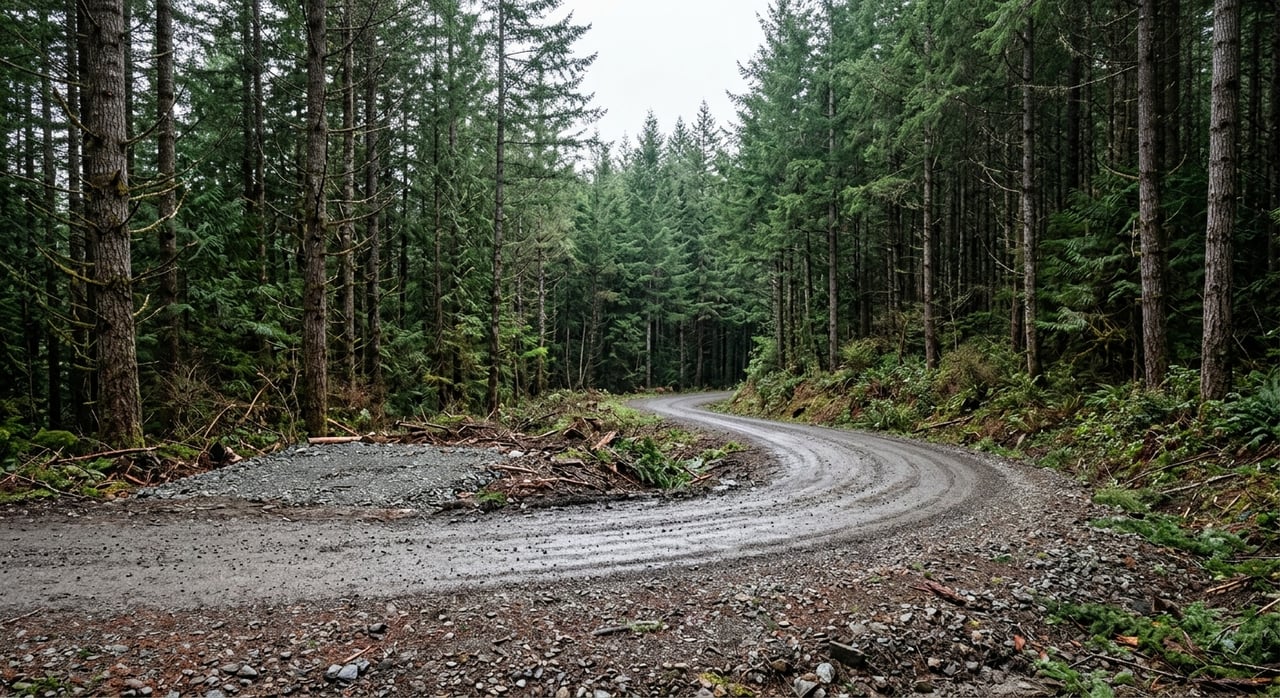
Operability can move value up or down quickly on a timber tract. The Oregon Department of Forestry says forest roads must be designed and maintained so sediment does not reach streams, stream crossings should be minimized, and log truck use may be restricted during wet weather.
The state also restricts harvesting, road building, and chemical use near streams, wetlands, and lakes where buffers are required. If a property has road challenges or sensitive water features, buyers may adjust their bids to reflect added cost or limited harvest flexibility.
Zoning and allowed uses
Douglas County zoning also shapes demand. The county recognizes Timberland Resource and Farm-Forest zones, and those zones can affect how buyers view long-term use, management options, and risk.
The Timberland Resource zone is intended to conserve lands for continued timber production and related forest uses. The county code also includes conditional uses in the zone that are subject to review standards, which means buyers should not assume every future use will be automatic.
How sellers can set up a stronger sealed-bid sale
Give buyers the same facts
A good sealed-bid process starts with a consistent information package. If every bidder gets the same maps, access details, title information, tax context, zoning facts, and known issues, you reduce confusion and create a more level playing field.
That approach also builds trust. Serious land buyers are more likely to bid confidently when they feel the process is organized and transparent.
Make deadlines and terms plain
Your bid instructions should be easy to understand. Confusing dates, vague deposit terms, or unclear contingency rules can shrink the buyer pool or produce offers that are hard to compare.
Clear instructions help buyers focus on value instead of guesswork. They also make the review process easier once bids come in.
Address closing friction early
Douglas County public-sale materials regularly emphasize as-is language, title caution, and award mechanics. In a private sale, it helps to explain these issues before bids are submitted.
That may include whether title insurance is expected, whether the sale is as-is, whether post-award conditions apply, and whether a backup offer may be retained. The more buyers understand up front, the less likely the deal is to wobble later.
When sealed bids may make sense
A sealed-bid format can be a smart fit when your Douglas County property has features that appeal to a focused buyer pool. That may include merchantable timber, large acreage, river frontage, recreational appeal, or a tract where privacy matters.
It can also work well when you want to avoid a long negotiation cycle and instead create one clear decision point. For many rural sellers, that combination of control, confidentiality, and structured competition is the real advantage.
If you are weighing whether a sealed-bid strategy fits your timberland, the right setup starts with accurate tract information, realistic pricing guidance, and a process designed around buyer confidence. David Brinker can help you evaluate the property, prepare a strong seller package, and choose the sale format that best fits your goals.
FAQs
How do sealed-bid sales work for Douglas County timberland?
- Buyers submit written offers by a fixed deadline using the seller’s required format, and bid prices stay confidential until the opening or review period.
Why would a Douglas County timberland seller use sealed bids?
- Sealed bids can create cleaner price discovery, protect privacy, and let the seller compare serious offers under the same timeline and rules.
What should buyers review before bidding on Douglas County timberland?
- Buyers should review maps, access, title status, tax and special-assessment status, zoning, and any known road, survey, or harvest-related issues.
Can a Douglas County timberland seller reject the highest bid?
- Yes. County guidance shows that qualification and responsibility matter, so a seller may favor a stronger, more dependable offer over a higher but weaker one.
What tax issues matter in Douglas County timberland sales?
- Special assessment status, Potential Additional Tax, possible back taxes after disqualification, and Oregon timber harvest taxes can all affect value and buyer confidence.
Does zoning matter in a Douglas County timberland sealed-bid sale?
- Yes. Timberland Resource and Farm-Forest zoning can affect permitted uses, review standards, and how buyers price future potential and risk.