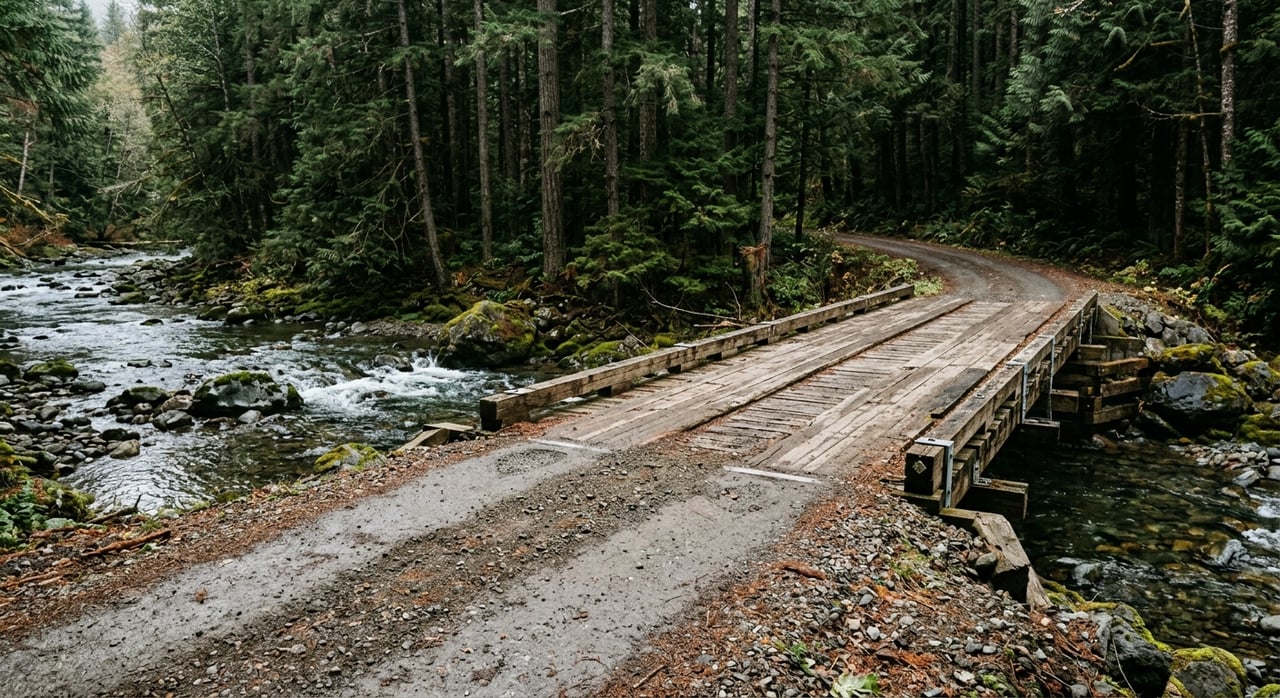
If you are torn between a place on the Umpqua and a tract up in the timber, you are asking the right question. In Douglas County, those two property types can deliver very different ownership experiences even when the acreage looks similar on paper. This guide will help you compare recreation, privacy, access, timber potential, and due diligence so you can choose the fit that matches your goals. Let’s dive in.
Why This Choice Matters in Douglas County
Douglas County is a big, varied landscape that stretches from the Pacific Ocean to 9,182-foot Mount Thielsen and contains the entire Umpqua River watershed. It also includes nearly 2.8 million acres of commercial forest land, with more than half of the county federally owned. That mix shapes who your neighbors may be, how access works, and what kind of management constraints can come with a property.
For buyers, that means riverfront and upland timberland are not just different views. They often come with different permit questions, road needs, recreation patterns, and long-term management options. The right choice usually depends less on romance and more on how you plan to use the land.
Riverfront Strengths on the Umpqua
Riverfront parcels usually win on immediate lifestyle appeal. You may get direct access to fishing, boating, rafting, swimming, camping, or trail-based recreation in a way upland tracts often cannot match. In the North Umpqua corridor, the recreation draw is especially strong, with fishing, class III whitewater, the 79-mile North Umpqua Trail, and access from Highway 138.
That access is a major benefit, but it also changes how the property feels day to day. BLM describes the corridor as readily accessible, and a recent BLM press release says it receives between 100,000 and 250,000 annual visitors. If a parcel sits near a highway, campground, trailhead, or public access point, the experience may be more active than private.
Riverfront can also offer scenic value that is hard to duplicate. Water, mature trees, and the sound of the river create a strong sense of place. For a lifestyle and recreation buyer, that may be the whole point.
Best fit for riverfront buyers
Riverfront often makes the most sense if your top priorities are:
- Water access
- Fishing, boating, or rafting
- Scenic setting
- Trail and recreation proximity
- A retreat-oriented ownership experience
Upland Timberland Strengths
Upland timberland usually offers a different kind of value. Instead of immediate water access, you may gain more seclusion, more operational control, and more room to think long term about forestry and land stewardship. In many cases, that makes upland ground a better fit for buyers focused on timber, privacy, and management flexibility.
That said, not all upland acreage performs the same. OSU Extension notes that timber economics depend on topography, access, log size and quality, and distance to mill. A tract that looks good on a map may still underperform if roads are weak, hauling is expensive, or the site is less productive than expected.
For many buyers, upland timberland is attractive because it can be quieter and less exposed to incidental public traffic than a recreation corridor parcel. That is often true in practice, but it is not automatic. Some upland tracts are still visible from roads or affected by nearby forest activity.
Best fit for upland buyers
Upland timberland often makes the most sense if your top priorities are:
- Forestry potential
- Privacy and seclusion
- Flexible land management
- Long-term stewardship
- Less recreation traffic nearby
Compare Privacy and Recreation Use
One of the biggest differences between these property types is how you will actually experience them on a Saturday afternoon. Riverfront often feels more alive, with nearby anglers, rafters, campers, or trail users depending on the location. Upland timberland often feels more removed, especially if access is limited and public recreation is not concentrated nearby.
This is why map work and on-the-ground review matter. A river parcel near a busy access point may feel very different from a river parcel tucked away from highway traffic. The same goes for upland land, where a visible ridgeline tract may feel less private than a more interior parcel with controlled access.
Know the Access and Cost Differences
Access can shape both enjoyment and ownership cost. For riverfront, the attraction is often easier recreation access and closer connection to established travel routes. In the North Umpqua corridor, Highway 138 and public amenities support that convenience.
For upland timberland, roads often become the main cost center. OSU Extension notes that forest roads are critical for management, timber extraction, fire protection, and development, but they are expensive to build and maintain. It also notes that transportation can account for up to 30% of a logging operation, which is a meaningful number if timber production is part of your plan.
Questions to ask about access
Before you move forward, ask for:
- A current road map
- Any known easements or access agreements
- Information on road condition and maintenance needs
- Distance to likely haul routes or mills
- Details on any stream crossings or access limitations
Riverfront Due Diligence Comes Early
If you are leaning toward riverfront, start your due diligence early. Oregon’s NFIP guidance says floodplain maps and floodplain permits are handled locally, and flood insurance can be required for federally backed loans in special flood hazard areas. That means flood zone review is not something to leave until the end.
You will also want to verify septic and land-use status before assuming a parcel is ready for your plans. Douglas County notes that planning clearance is typically required before building or onsite septic permits, and the county maintains local septic records through its onsite program. With updated DEQ onsite wastewater rules taking effect Jan. 1, 2026, septic feasibility deserves real attention.
Riverfront due diligence checklist
Focus on these items first:
- Floodplain status
- Whether flood insurance may be required
- Planning clearance needs
- Septic records and feasibility
- Proximity to public access, campgrounds, trails, or highways
Timber Potential Is About Site Quality
If you are comparing riverfront timber to upland timber, do not assume the higher ground is automatically the better forestry play. OSU defines site index as a measure of how tall dominant trees grow, reflecting climate and soil quality. In a southwest Oregon case study, site index for Douglas-fir ranged from 55 to 80 on one tract depending on aspect and soils, with north slopes more productive than south-facing slopes on that property.
That is a useful reminder for Douglas County buyers. Timber value should be tied to site quality, species mix, stand age, harvest history, and access, not just elevation or how rugged the land looks. A well-positioned upland tract may outperform, but only if the site has the moisture, soils, and infrastructure to support it.
OSU also reports that Douglas-fir decline in southwest Oregon is most common and severe on hot, dry sites along the margins of the Rogue, Applegate, and Umpqua valleys, especially below 3,500 feet and under 35 inches of annual rainfall. Fewer trees have died on more productive forestlands with higher rainfall or elevation. In other words, not all upland ground carries the same biological strength.
Key timber questions to ask
When reviewing a timberland parcel, ask for:
- Stand age
- Species mix
- Site index information
- Harvest history
- Road map
- Stream crossing details
- Buffer or leave-tree limitations
Riparian Rules Can Limit Riverfront Management
River-adjacent timber can be appealing, but it often comes with tighter management rules. Oregon’s Forest Practices Act restricts harvesting, road building, and chemical use near streams, rivers, lakes, and wetlands. Fish-bearing streams also require leave trees and protective buffers.
That does not make riverfront timber a bad investment. It simply means the management picture can be more constrained than on comparable upland ground. If your main goal is operational flexibility for thinning, fuels work, and road improvement, upland timberland may offer a simpler path.
Wildfire Is a Both-Sides Issue
It is easy to assume the river is the safer choice, but wildfire risk is not that simple. OSU notes that riparian systems can help disrupt fire spread in favorable conditions, but dry summers can also allow fuel build-up and make those same areas vulnerable to high-severity fire. River frontage is not automatically low risk.
Wildfire is a countywide issue in Douglas County. State hazard information notes wildfire danger for homes in the wildland-urban interface, and Douglas County’s 2024 hazard planning materials report 37,252 buildings and $10.2 billion in countywide wildfire exposure. Whether you prefer riverfront or upland, you should compare fuels, access for fire response, and your ability to create defensible space.
How to Decide Between the Two
The best property is the one that matches your actual use, not just the one that photographs best. If you want water access, scenery, and immediate recreation, riverfront may be the clear winner as long as you are comfortable checking floodplain, septic, and public activity factors. If you want forestry potential, privacy, and more management control, upland timberland may be the better fit if roads, site quality, and wildfire planning pencil out.
A smart search usually starts with a simple question: What do you want this land to do for you over the next 5 to 20 years? Once that answer is clear, the tradeoffs get easier to evaluate.
At Made Out West, we believe good land decisions come from matching place with purpose. If you want help comparing riverfront and upland opportunities in Douglas County, talk with David Brinker about the timber, access, land-use, and stewardship factors that matter most.
FAQs
What makes Umpqua riverfront property different from upland timberland in Douglas County?
- Riverfront property usually offers stronger direct recreation access and scenery, while upland timberland often offers more privacy, road-focused management planning, and forestry-oriented use.
What should you check before buying riverfront land in Douglas County?
- You should verify floodplain status, possible flood insurance requirements for certain loans, planning clearance needs, septic records, and how close the parcel is to public access points, campgrounds, trails, or highways.
What affects timber value on upland land in Douglas County?
- Key factors include site index, soils, aspect, stand age, species mix, harvest history, road access, hauling distance, and any stream or buffer constraints.
Can riverfront timberland have more management restrictions in Oregon?
- Yes. Oregon’s Forest Practices Act restricts harvesting, road building, and chemical use near streams, rivers, lakes, and wetlands, and fish-bearing streams require protective buffers and leave trees.
Is riverfront land safer from wildfire than upland timberland in Douglas County?
- Not necessarily. Riparian areas can help slow fire in some conditions, but dry summers and fuel build-up can still create high-severity fire risk, so each parcel needs its own review.
What county approvals should you confirm before planning a dwelling on rural land in Douglas County?
- You should confirm whether planning clearance, a pre-application conference, or a formal land-use application is needed before assuming a dwelling or parcel split is feasible.