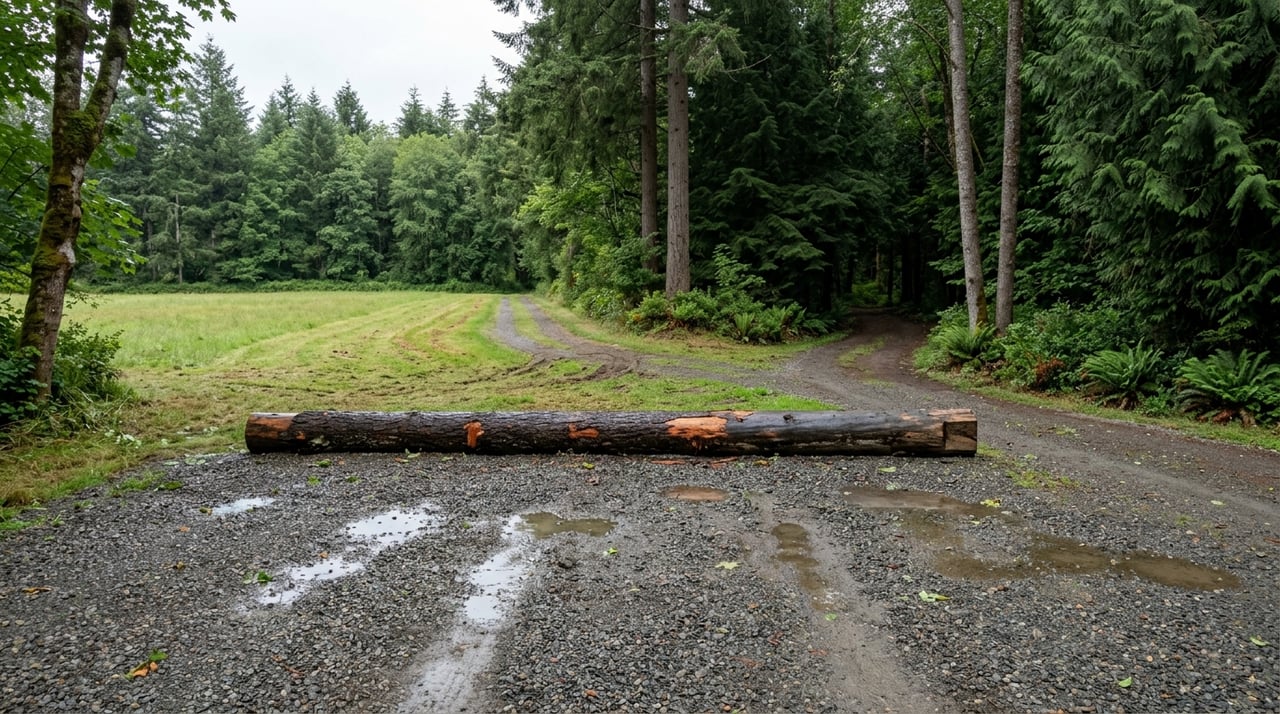
A Benton County parcel can look perfect on paper and still be hard to balance in real life. You may want room for timber, ground for farming, and a future homesite, but those goals do not always fit the same part of the property. If you are looking at land near Corvallis or Philomath, this guide will help you read the zoning, spot the practical constraints, and think through a phased plan before you buy. Let’s dive in.
Start With the County Maps
For mixed-use rural land in Benton County, the county map tools are the right first stop. You can search by owner name, address, map and tax lot, or tax account, and the map gallery includes zoning, natural features, floodplain, soils, topography, aerial photos, surveys, partition plats, and road types.
That matters because one rural parcel can carry several layers of review at once. A property may look simple from the road, but the zoning, floodplain, topography, and access pattern often tell a very different story when you pull up the maps.
Benton County also maintains about 1,452 tax-lot maps covering 37,270 tax lots. For buyers trying to understand where timber ground ends, where flatter farmable ground begins, and where a homesite might realistically fit, those records can save time early.
Know the Main Zoning Types
Near Corvallis and Philomath, the designations most likely to shape your plans are EFU, FC, and RR. On the county plan map, Agriculture generally lines up with EFU, Commercial Forestry with FC, and Rural Residential with RR.
MPA exists in Benton County, but it is limited to the Alsea and Lobster Valleys. That means it is usually not the zoning fit for parcels closer to Corvallis or Philomath.
RR also comes in several minimum parcel-size variants. Benton County lists 2-, 5-, 10-, and 20-acre minimum parcel versions of the RR zone, so the exact parcel standard matters when you evaluate what is possible.
EFU and Farm Priority
EFU stands for Exclusive Farm Use. In this zone, the county’s code is designed to preserve commercial agricultural production and limit nonfarm uses that may conflict with it.
If you want a dwelling in EFU, the path is often narrower than buyers expect. Benton County allows certain farm-related dwellings when income and occupancy tests are met, and on high-value farmland the county uses an $80,000 gross income test and requires that there be no other dwelling on the farm or ranch operation.
Some nonfarm dwellings may be approved through a conditional use permit. But the county says the parcel must first be disqualified from farm or forest valuation, and it also states that no additional permanent dwelling may later be sited on the same lot under the nonfarm, lot-of-record, or forest dwelling provisions.
That makes EFU land worth studying carefully before you assume you can add a homesite later. For many buyers, the farm ground may be attractive, but the dwelling path is where the real due diligence begins.
FC and Forest Priority
FC is the county’s Commercial Forestry zone. Here, Benton County’s focus is on tree growing, timber harvest, wildlife habitat, recreation, and grazing.
A dwelling may be possible in FC, but it is not automatic. The county allows one dwelling only if acreage or productivity tests are met, no other dwellings are allowed elsewhere on the tract, and the proposed home complies with county forest siting standards.
Those forest siting standards can shape the whole layout of your property plan. The county can push the homesite near existing roads or structures and onto the least valuable timber area, which is often a smart outcome if you want to protect productive timber ground for the long term.
The county also requires that the dwelling stay off slopes over 40 percent. The site must use a domestic water supply from a well or spring, have a sewage disposal system, and be located in a fire protection district or protected by an approved alternative.
If access comes by a private road or a road controlled by a public forest agency, Benton County may require proof of a long-term road use agreement. For forested parcels, that single issue can become a major part of whether a homesite is workable.
RR and Homesite Flexibility
RR is often the most flexible path if your main goal is a rural homesite that still leaves room for small-scale farm or forest use. Benton County says the RR zone allows farm or forest use plus one dwelling per parcel.
That said, RR does not mean every homesite is easy or build-ready. The county describes RR as land outside urban areas that is generally unsuitable for resource use or already committed to rural residential use, and it still expects the property to support housing based on water, sewage, roads, and natural-hazard capacity.
In other words, RR can be simpler than EFU or FC for a home, but practical site conditions still control the outcome. A nice-looking clearing does not help much if water, septic, access, or floodplain issues get in the way.
Floodplain Can Change the Plan
Floodplain is a separate layer you should check early. Benton County says about 57,000 acres and roughly 3,200 parcels are mapped in flood hazard areas.
A parcel in Floodplain Agriculture or a floodplain overlay may still allow farm use, forest use, and one dwelling per parcel. But floodplain review becomes its own layer of approval, and that can affect where improvements are placed and how the permit path unfolds.
If your intended homesite sits near a creek bottom, low pasture, or other flat ground, floodplain review may become one of the first issues to solve. This is one reason county map review should come before you get too attached to one building location.
Infrastructure Often Decides the Real Answer
On Benton County land, the zoning may tell you what is possible in theory. Infrastructure usually tells you what is realistic in practice.
Before a new dwelling permit is issued, Benton County requires evidence of a potable water supply. The county also asks for a water quality test and a well pump test completed within the last 12 months.
For septic, a new dwelling requires a previously approved onsite septic site feasibility permit, followed by the installation permit process. If the site lies in a floodplain, a separate floodplain development permit is also required, even when other permits are already part of the project.
The county’s dwelling submittal checklist also calls for an access and water supply worksheet. On a mixed timber-and-farm parcel, these requirements can quickly narrow the best homesite to the area that is easiest to serve, not just the area with the best view.
Wildfire Is a Practical Siting Filter
Wildfire risk deserves attention on forested and brushy properties. Benton County describes rural areas where homes may sit among forest vegetation, with narrow roads, no hydrants, and sloping terrain.
The county’s wildfire guidance emphasizes defensible space, ember-resistant building details, and safe separation between the house or outbuildings and items like firewood, propane tanks, gutters, and other fuels. If you are evaluating a homesite on a timbered tract, this is not just a safety issue. It can also influence where the house, shop, driveway, and turnaround should go.
A Smart Way to Evaluate a Mixed-Use Parcel
If you want timber income, some usable farm ground, and a future place to build, it helps to think in phases instead of trying to solve everything at once. Benton County’s own review sequence supports that approach.
Phase 1: Confirm Zoning and Overlays
Start by confirming the zoning and all overlay layers on the county map. Check for EFU, FC, RR, floodplain, topography, roads, and other natural-feature constraints.
This first step helps you sort out whether the parcel is mainly a farm property, mainly a timber property, or a rural residential property with resource-use potential. That distinction shapes almost every decision that follows.
Phase 2: Verify the Parcel History
Next, verify whether the property is a lawful lot or tract. Also look for deed restrictions and any prior dwelling approvals.
This step is easy to overlook, but it can affect whether the parcel actually carries a dwelling opportunity today. A buyer should understand the legal status of the tract before making plans around a future homesite.
Phase 3: Review Special Assessment
Then check whether farm or forest special assessment is in place. Benton County says special assessment can reduce taxes, but disqualification can trigger recapture-style consequences.
The county lists up to 10 years of recapture for EFU or MPA farm special assessment and STF, and 5 years for non-EFU farm special assessment. Forestland qualification in Benton County also depends on being held for growing and harvesting marketable trees, and the county checklist references at least 2 acres and minimum stocking of 200 trees per acre.
For buyers, this matters because a shift from resource use to homesite development may carry tax impacts. It is better to understand that early than to treat it as a surprise later.
Phase 4: Choose the Least Disruptive Homesite
Once the legal and tax picture is clearer, pick the homesite with restraint. The best building area is often the place that is easiest to access and serve while doing the least damage to the parcel’s long-term farm or timber value.
Benton County’s forest code allows the Planning Official to require structures to be close to existing roads, clustered near existing structures, and placed on land least suited for growing trees. Even outside FC land, that is a useful principle for mixed-use property planning.
When you site the home on the easiest, least disruptive ground, you preserve more of what made the property attractive in the first place. That can mean better timber retention, cleaner field layout, and fewer infrastructure costs.
What This Means for Buyers Near Corvallis and Philomath
If you are shopping Benton County land, the biggest mistake is assuming every attractive rural parcel can support all three goals equally well. Timber, farming, and a homesite can coexist, but the county’s framework often makes one use primary and the others secondary.
EFU tends to put farm production first. FC tends to put forest production first. RR usually offers the clearest path to a homesite, though it still depends on water, septic, access, and hazard review.
That does not mean one zoning type is better than another. It means the right parcel is the one that matches your actual priorities and gives you a realistic path to use the land the way you intend.
If you want help thinking through a Benton County parcel with timber, farm, or homesite questions, David Brinker brings a land-focused perspective grounded in rural property, forestry, and practical risk reduction.
FAQs
What zoning matters most for Benton County land near Corvallis or Philomath?
- The zoning types most likely to matter are EFU for agriculture, FC for commercial forestry, and RR for rural residential use.
What does EFU zoning mean for a Benton County homesite?
- EFU zoning prioritizes commercial farm use, and a dwelling may require meeting specific farm-related standards or other county approval paths.
What does FC zoning mean for a Benton County timber parcel?
- FC zoning focuses on tree growing, timber harvest, habitat, recreation, and grazing, and a dwelling may be allowed only if county acreage, productivity, siting, water, sewage, and fire protection standards are met.
Is RR zoning the easiest path for a Benton County rural home?
- RR is generally the most flexible zoning for a homesite because it allows farm or forest use plus one dwelling per parcel, but the site still must work for water, septic, access, and hazard review.
Do I need to check floodplain rules on Benton County land?
- Yes, because floodplain review can apply as a separate layer of approval, and Benton County says thousands of parcels are mapped in flood hazard areas.
What utility checks matter before building on Benton County rural land?
- Benton County requires evidence of potable water, a recent water quality test, a recent well pump test, and an approved onsite septic feasibility permit before moving toward a new dwelling permit.
Can changing land use affect taxes on Benton County farm or timber property?
- Yes, because Benton County says farm and forest special assessment can reduce taxes, but disqualification may trigger recapture over multiple years depending on the program.
How should I choose a homesite on a mixed timber and farm parcel in Benton County?
- A strong approach is to place the homesite on ground that is easiest to access and serve while minimizing disruption to productive timber stands or farmable acreage.