![Made Out West Land Co. and Timberlog [X]](https://media-production.lp-cdn.com/cdn-cgi/image/format=auto,quality=85/https://media-production.lp-cdn.com/media/764c645a-93fe-42ec-8f62-516ab8e98171) Your Whole Portfolio, Priced Parcel by Parcel
Your Whole Portfolio, Priced Parcel by Parcel
GET YOUR REPORT
We built a way to value everything you own at once. Here's what it does, what it doesn't, and why we wrote the software ourselves.
Most people who own a lot of ground in western Oregon know exactly what one piece is worth. Usually it's the best one — the parcel with the good timber or the highway frontage, the one a neighbor asked about two summers ago.
The rest is fog.
There's the piece that came through a grandmother's estate and hasn't been walked in a decade. The forty that was bought as a hedge and never thought about since. The odd little corner that the county has taxed as farm ground for thirty years and that everyone assumes is worth about nothing.
Ask three people what all of it is worth together and you'll get three answers. The assessor's, which was never market value and was never meant to be. Your last appraisal, which covered one property on one date years ago. And a broker's guess, which is worth what guesses are worth.
We built TIMBERLOG[X] to give you the fourth answer.
Before we go further: what follows is a screening-level opinion of value, not a certified appraisal. It is a broker's opinion, prepared by licensed Oregon brokers, and it cannot be used as the basis of value for a lender, for tax reporting, or in court. The full boundary is spelled out below.
A Portfolio Opinion of Value is a single document that prices every parcel you own, individually, and then totals them.
Not a range for the whole holding. Not a per-acre average applied across everything. Each tax lot analyzed on its own terms — its species, its age class, its land class, its zoning, its access, its water — and then rolled together so you can see the shape of what you have.
The report comes back with your properties ranked highest to lowest by value. In our experience the top three lines are where the conversation actually happens. That's usually where an owner finds out that the parcel they'd mentally written off is carrying more weight than the one they've been protecting, or that the piece they were about to sell first should probably go last.
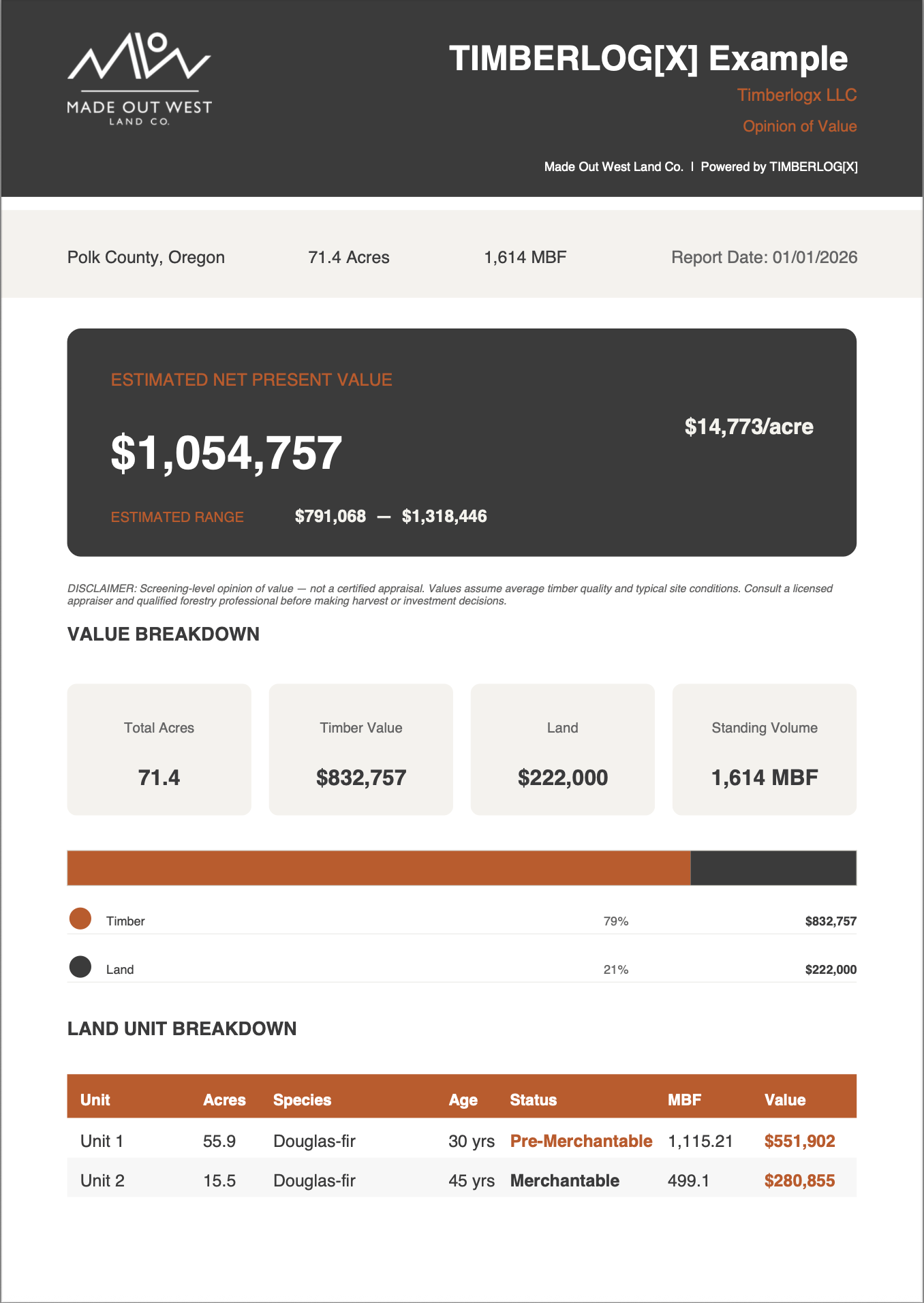
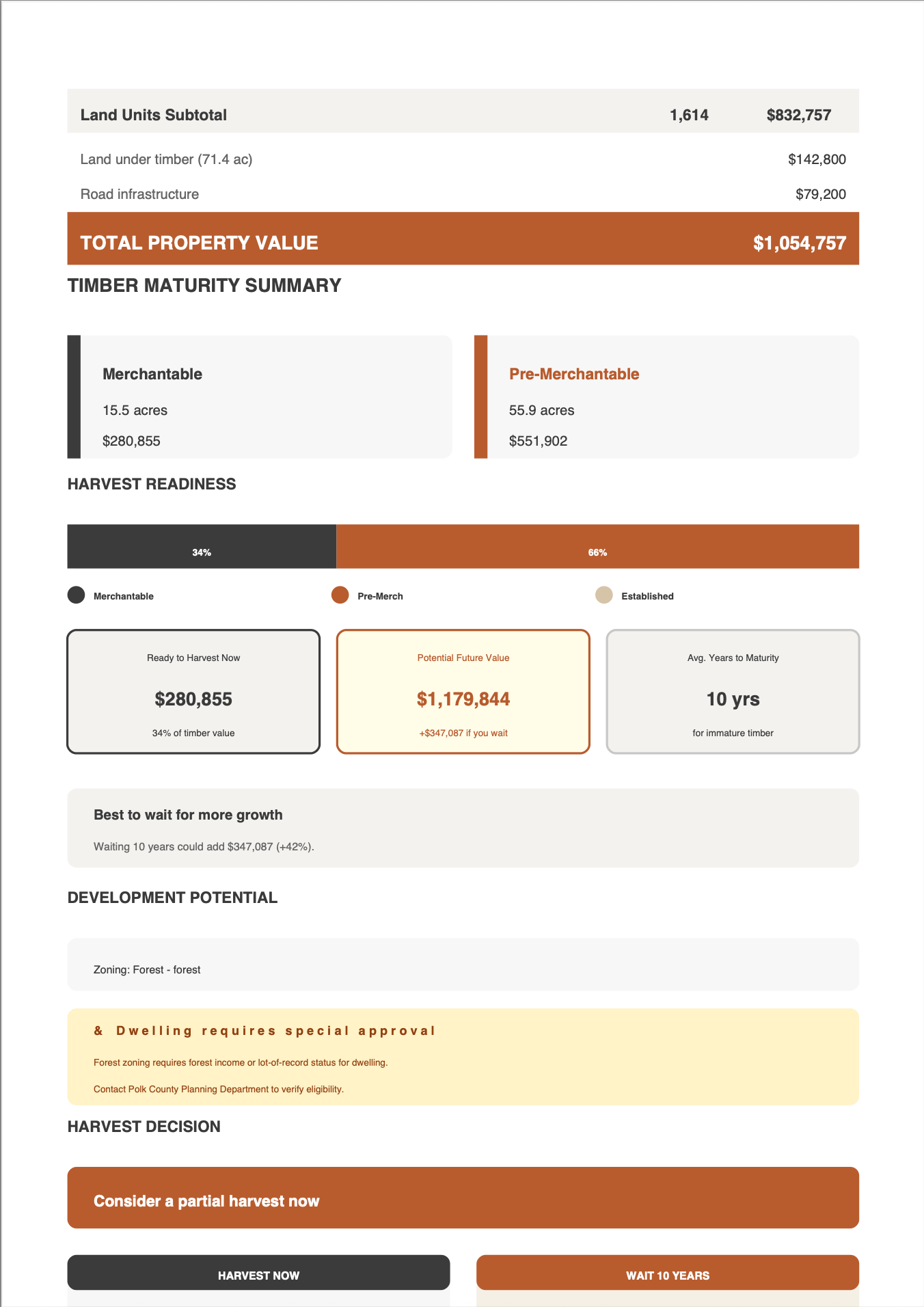
Underneath the ranking, the value is broken into its parts: standing timber, bare land, improvements, features and amenities, and development potential. That split matters more than the total does. A standing harvest and the dirt underneath it are two different assets with two different buyers and two different timelines. Priced together as one number, you can't sell one without giving away the other.
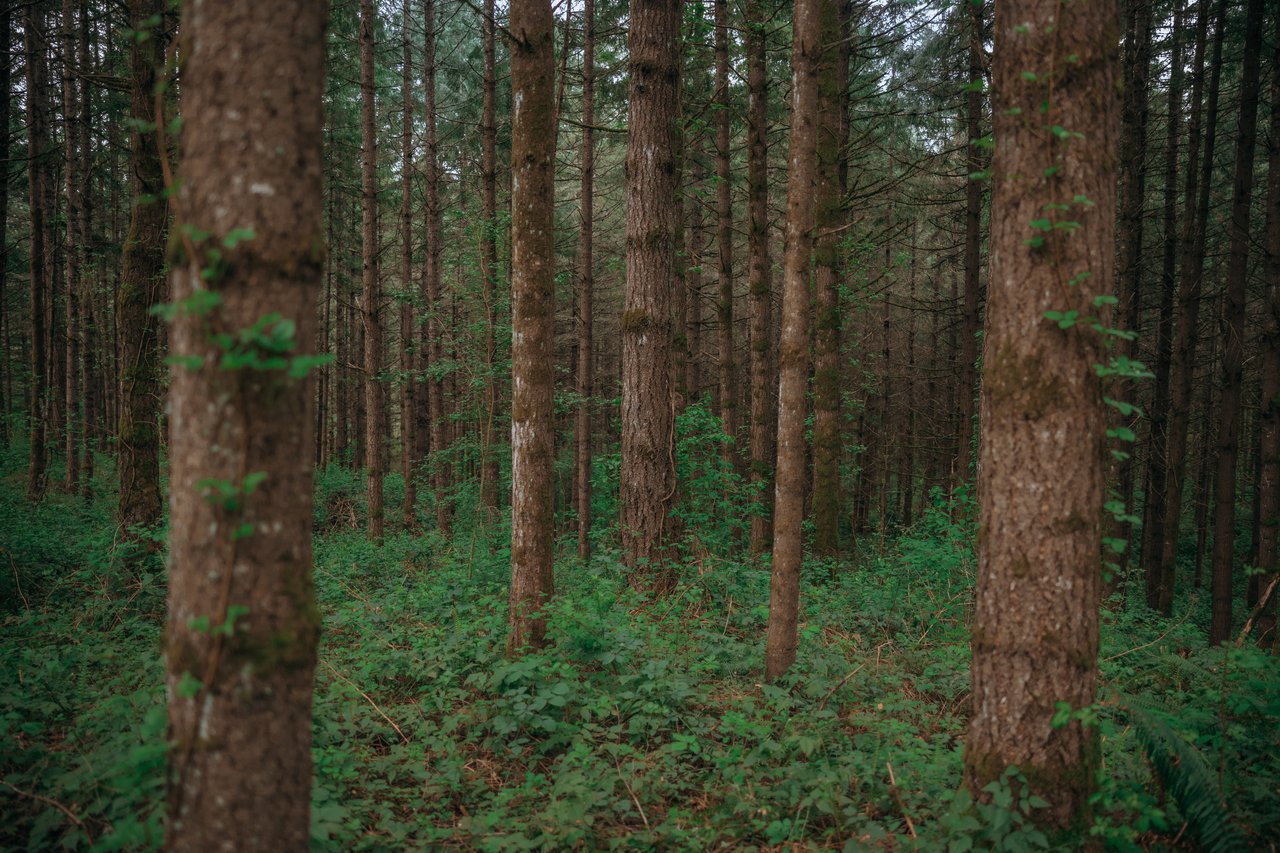
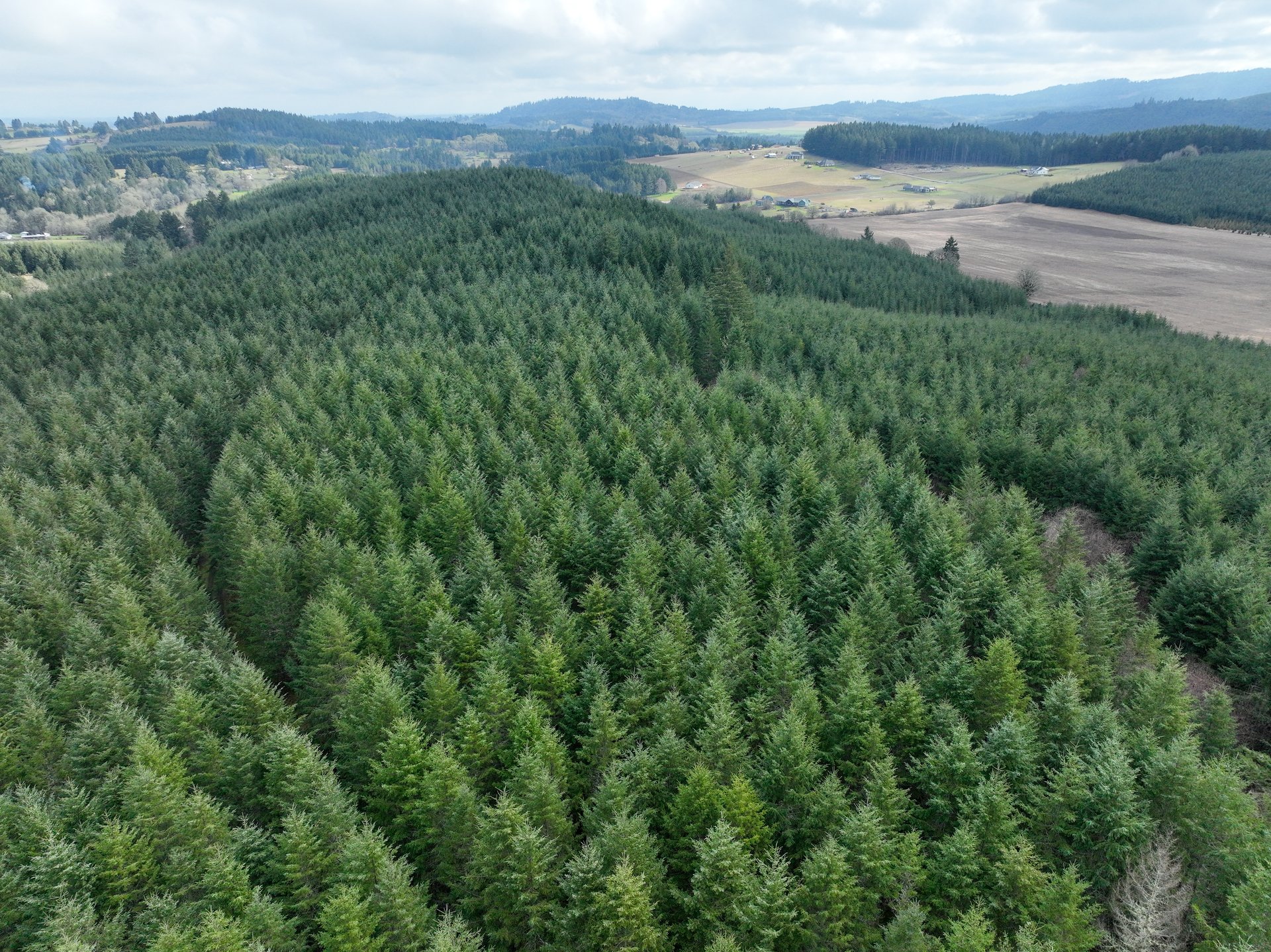
Then every property gets its own page. Legal description, acreage, standing volume, estimated net present value, a per-acre figure, and a supporting range. If the property is mixed — and in the Willamette Valley and the Coast Range foothills, most of them are — each land unit is broken out separately. Ninety-six acres of Douglas-fir and hemlock at thirty-eight years is one line. The twenty-four-year alder is another. The ag ground, the hay, the roads, the home sites all stand on their own.
A mixed property priced as one number is a mixed property priced wrong.
Every assumption is printed on the page
This is the part we care most about, and it's the part that makes the report different from a number somebody emails you.
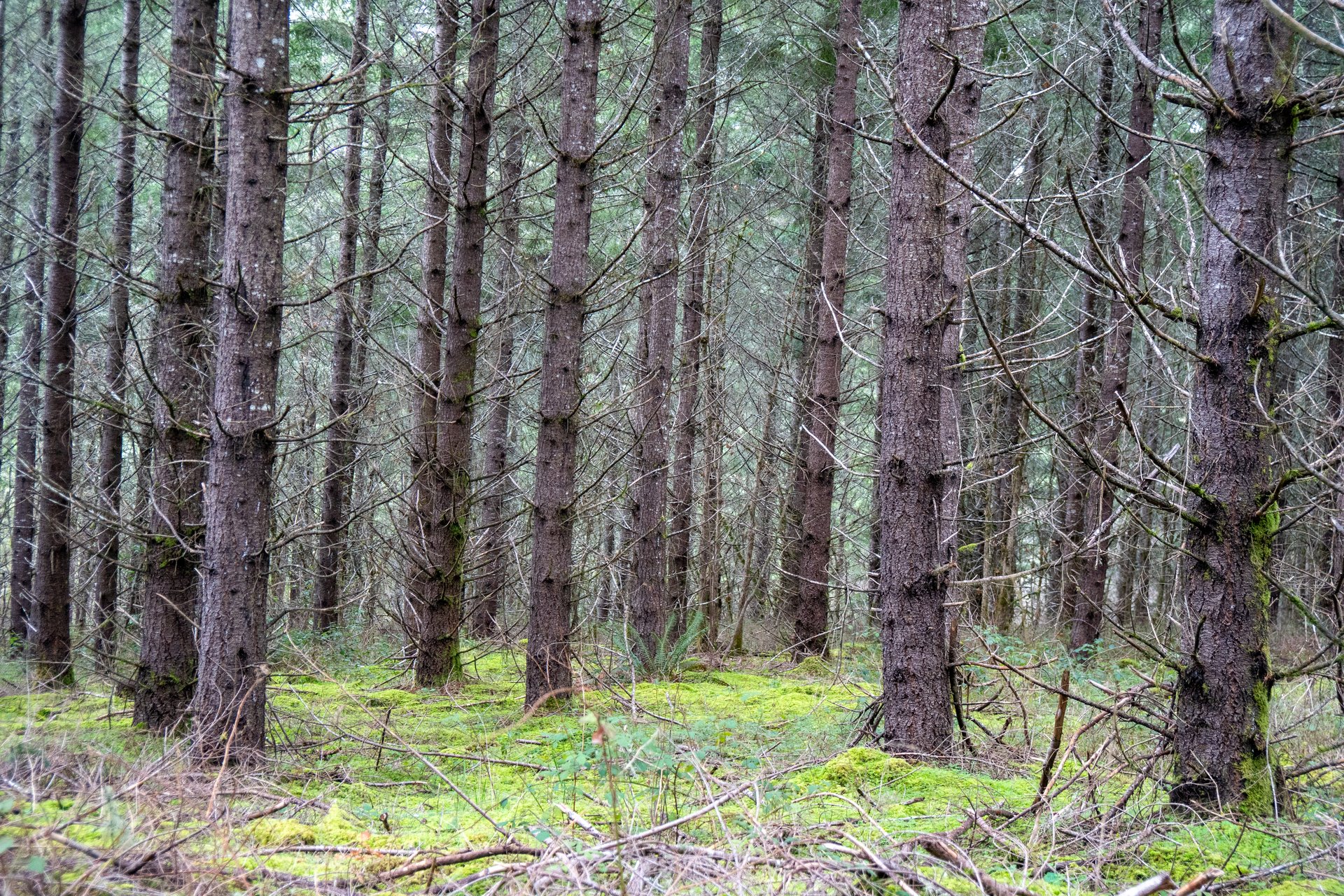
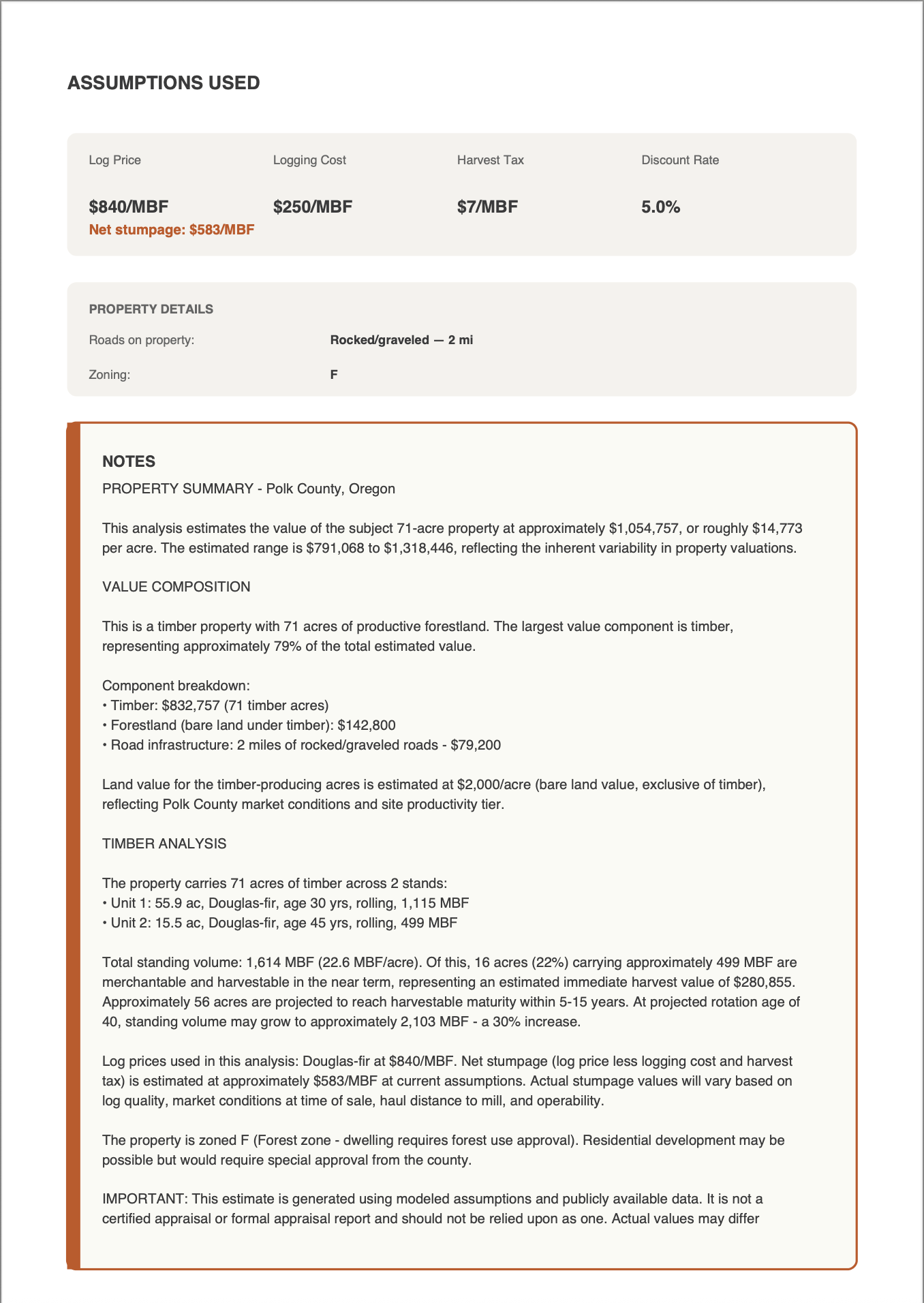
On each timbered property, the report prints the log price we used for every species. The logging cost. The harvest tax. The discount rate. The average net stumpage that falls out of those inputs. If the volume came from yield table modeling rather than a cruise, it says so.
You don't have to accept our number. You can look at what went into it and tell us where you disagree. If you think Douglas-fir is going to hold better than we've assumed, or your haul distance is worse than the model figures, that's a conversation about inputs rather than a disagreement about conclusions. That's a much more useful conversation to have.
No black box. If you don't like the number, you can see exactly where it came from.
What we do with the appraisals and timber cruises in your drawer
Almost every owner with real acreage has a folder of appraisals somewhere. A refinance in 2018. An estate in 2020. A partition that never happened in 2021.
Most people assume those are dead paper. They aren't.
Where a prior appraisal an or timber cruise exists and the property hasn't materially changed, we can carry it forward instead of rebuilding value from scratch. The report shows the original component values, the annual rate applied, the effective dates, stand information, site class, the elapsed time, and the current figure — plus the basis, so anyone reading it knows which document the number came from.
It's faster and it costs less than deriving everything fresh. It also preserves the original appraiser's component allocations, which is often better information than we'd generate independently. Send us the folder.
Where the line is
This is a screening-level opinion of value. It is not a certified appraisal, and we won't represent it as one.
It's useful for a partner buyout, for sequencing dispositions, for getting your arms around holdings you've never seen priced together, for deciding what to walk before you decide what to sell. It is the right tool for thinking clearly about property you own.
It is not the right tool if you need a number for a lender, for the IRS, or for a court. It may not be used as the basis of value in a federally related lending transaction, for federal or state tax reporting, or in litigation or condemnation proceedings. Those require a certified appraisal from a licensed appraiser, full stop. Tell us that's what you're after and we'll point you toward someone who works your county — we'd rather send you to the right person than sell you the wrong document.
It is also not a substitute for the other diligence a real transaction requires. It is not a professional timber cruise, a title review, a boundary survey, or an environmental assessment, and it doesn't replace any of them.
The limitations worth knowing: values assume average timber quality and typical site conditions. Standing volume is modeled from yield tables at the entered species, age, site index and stocking — it is not cruised. Timber values are discounted to projected harvest date at the rate shown on each property page. Actual stumpage will vary with log quality, market conditions at the time of sale, haul distance to mill, and operability. No physical inspection, boundary survey, or title work is performed for this report unless we tell you otherwise.
Consult a licensed appraiser and a qualified forestry professional before making harvest, lending, or investment decisions.
Why we wrote the software ourselves
We could have bought something. There are platforms that do pieces of this, mostly built for institutional timberland at institutional scale, and mostly built by people who have never had to explain a stumpage estimate to a family standing on their own logging road.
So we built our own instead. TIMBERLOG[X] is ours — written by the same brokers who walk the ground, calibrated against western Oregon conditions, and adjusted every time the market tells us we had something wrong. It isn't licensed to anyone else and no other brokerage runs it.
That last part matters less than people think, honestly. Anyone with enough patience could build a calculation engine. What they can't easily build is the record of what we estimated versus what the ground actually sold for, accumulating quarter after quarter. That's the part that makes the next estimate better, and it's the part that only comes from doing the work in one place for a long time.
Start with one
You don't need a portfolio to use this. A single tax lot is enough, and starting with one property is a reasonable way to see whether the report tells you anything you didn't know.
Send us a tax lot number — or the whole list, if you'd rather. We'll scope it and tell you what it costs before we start.
GET YOUR REPORT
Made Out West Land Co. David Brinker Sr. & David Brinker Jr., Licensed Brokers in the State of Oregon Dallas, Oregon · madeoutwestlandco.com
All figures in our sample report are fictional and are provided for illustration only.
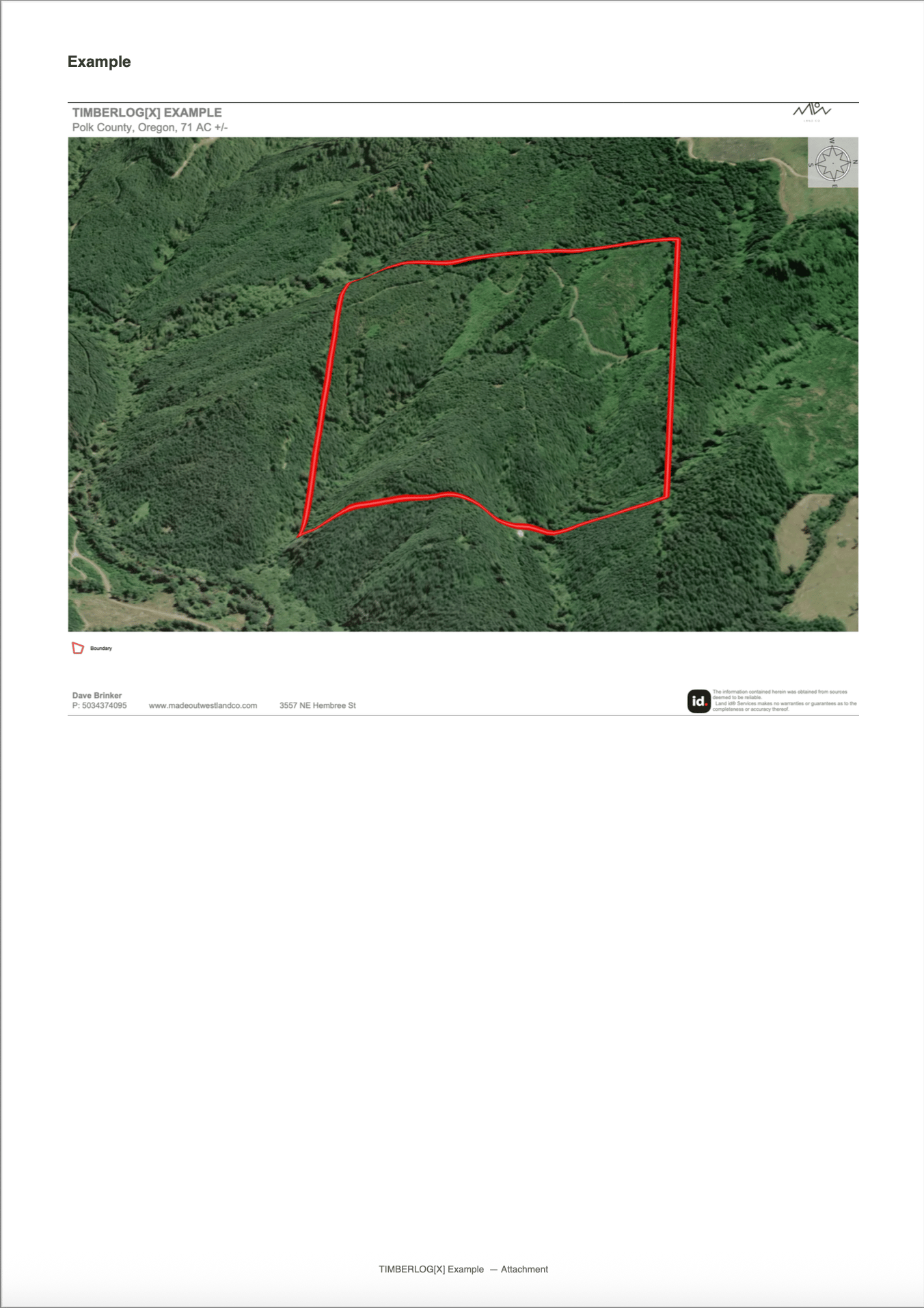
EXAMPLE Report:
GET YOUR REPORT