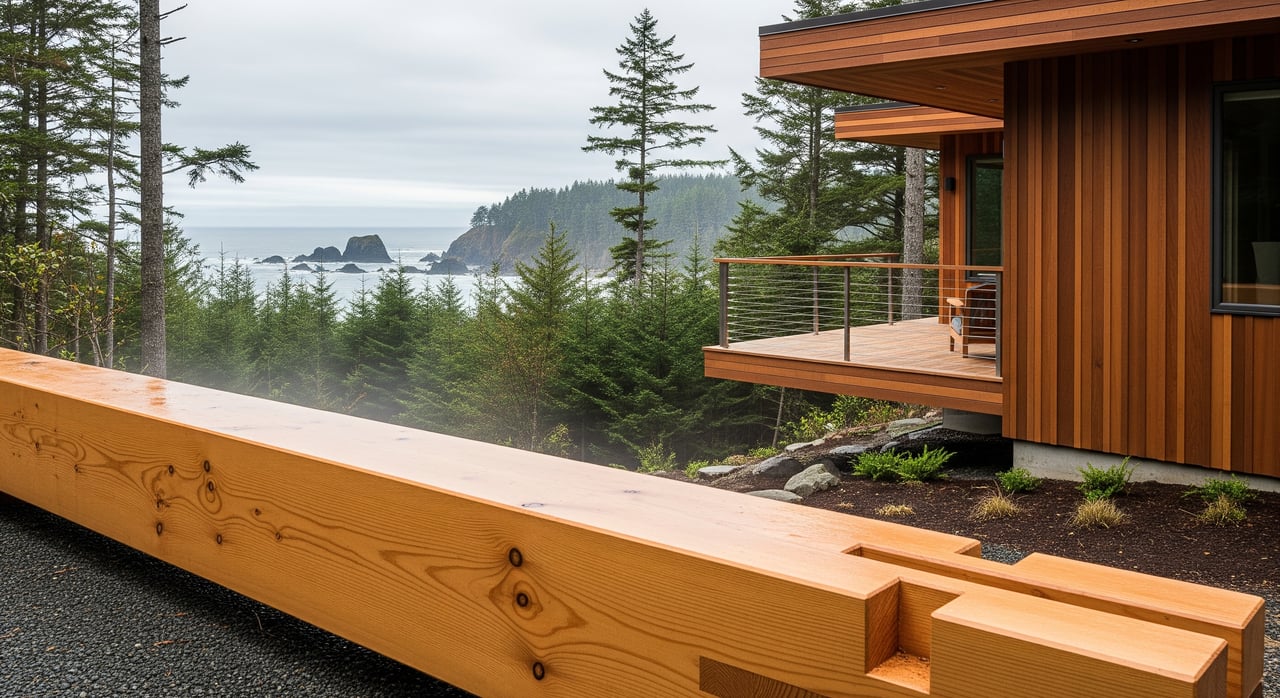
Ever walk a South Coast parcel and wonder what those trees are telling you about the land? If you are comparing properties around Coos Bay, Coquille, or the Coast Range foothills, the dominant timber species can reveal a lot about soils, moisture, and long-term value. In this guide, you’ll learn how to spot the key species you’ll see in Coos County, what each one signals about a site, and how that affects markets and management. Let’s dive in.
Coos County forest at a glance
Coos County stretches from tidal estuaries and coastal plains to river valleys and the Coast Range foothills. Elevation ranges from near sea level to higher slopes, and that mix creates big differences in microclimate and drainage across short distances. Coastal fog and ocean proximity keep temperatures moderate and supply summer moisture to near-shore stands.
Forest ownership is a patchwork of private industrial timberland, small family forests, and public parcels. Across western Oregon’s coastal counties, forest inventory data show Douglas-fir as the backbone of commercial production, with Sitka spruce, western hemlock, and red alder common on wetter or recently disturbed sites. For regional context, review coastal county inventory summaries from the USDA Forest Service FIA program.
The big four species
Douglas-fir
You’ll see Douglas-fir widely across Coos County, especially on drier, well-drained uplands in the Coast Range foothills and inland valleys near Coquille. It is common on south and west slopes that dry quickly after rains. Managed plantations and mixed stands often center on Douglas-fir due to its reliable performance on good sites.
Douglas-fir responds well to sun and site preparation. Growth is strongest on deep, well-drained loams and benches. Form and volume vary with site productivity and moisture, which is why two nearby hillsides can look similar but produce very different yields.
Markets and uses include structural lumber, heavy framing, plywood, and export logs. On productive sites, rotation length is driven by site class and ownership goals. If your target is long-term merchantable value, Douglas-fir on deep soils is a strong anchor species.
Buyer takeaway: Douglas-fir often signals higher sawtimber value and clear planting pathways after harvest. Expect clearcut and replanting regimes in many managed forests.
Sitka spruce
Near the immediate coast, estuaries around Coos Bay, and very moist windward lower slopes, you’ll find Sitka spruce. It tolerates salt spray and thrives in cool, foggy conditions. Move inland onto drier, well-drained uplands and spruce quickly gives way to other species.
On the right coastal sites, Sitka spruce forms tall, straight stems. It has specialty value for certain lumber uses and historically for applications where light, strong wood matters. It can also flow to pulp markets, though less commonly than some conifers in certain years.
Buyer takeaway: Spruce near shorelines and riparian edges can carry value, but near-water parcels often come with permitting, buffer, and erosion considerations. Confirm what is allowed under the Oregon Department of Forestry’s Forest Practices guidance.
Western hemlock
Western hemlock shows up in valley bottoms, north-facing ravines, shaded draws, and midslope pockets that hold more moisture. It is shade tolerant and often sits under a canopy until a gap opens. Over long periods without disturbance, it can dominate cooler, wetter microsites.
Hemlock is a key fiber species for pulp and composite products, and it produces framing lumber when trees reach larger diameters. It typically appears in mixed harvests alongside other conifers.
Buyer takeaway: Hemlock points to cool, moist conditions. Regeneration can be slower without canopy openings, and seedbed conditions matter. If you see lots of hemlock, plan for moisture, shade, and access considerations in your management approach.
Red alder
Red alder favors streams, riparian zones, disturbed ground, and recently harvested areas. It is common near Coquille and on lower slopes, and it often rushes into sites after floods, slides, or logging. You’ll also find alder on fertile alluvial soils and estuarine deposits.
Alder grows fast, fixes nitrogen, and matures on a shorter rotation than most conifers. It supplies veneer, furniture-grade lumber, specialty wood, and pulp. In some hardwood markets, quality alder can command a premium.
Buyer takeaway: Alder signals fertile, well-drained riparian soils and recent disturbance. Some owners hold alder for a shorter-term income stream or to improve soils before transitioning to conifer.
Site factors that shape stands
Elevation and topography
- Near sea level and estuaries: expect Sitka spruce and alder.
- Valley bottoms and north-facing ravines: western hemlock and alder are common.
- Mid to upper slopes and drier benches: Douglas-fir tends to dominate.
Foothill parcels near Coquille tend to show more Douglas-fir and mixed stands. Near Coos Bay’s estuary, spruce and alder increase.
Fog and maritime influence
Coastal fog moderates summer moisture stress and reduces daytime evapotranspiration. That extends growth on days that would otherwise be too dry and helps fog-sensitive species like Sitka spruce and western hemlock. For climate context and coastal normals, browse regional data from NOAA’s National Centers for Environmental Information.
Soils and drainage
- Deep, well-drained loams: favor fast Douglas-fir growth and larger sawtimber potential.
- Alluvial and estuarine soils: often support red alder, willow, and Sitka spruce in transition zones.
- Poorly drained or seasonally saturated microsites: favor hemlock and alder.
Before you buy, pull parcel-level soils data using the NRCS Web Soil Survey. Pair that with on-site observation to confirm drainage patterns.
Disturbance patterns
Floods, slides, debris flows, and logging open early-successional habitat that alder quickly colonizes. With active site prep and planting, Douglas-fir often reestablishes. Where seed sources remain and moisture stays high, hemlock and spruce can fill in naturally. Windthrow and slope stability are additional considerations near the coast.
What it means for value and products
- Douglas-fir on deep, productive soils: typically the highest sawlog value over a full rotation.
- Mixed conifer and alder stands: can provide earlier cash flow from alder, but you will use different mills and markets than pure conifer sawlogs.
- Hemlock and spruce: often flow to pulp or utility markets unless stands reach larger diameters suitable for sawlogs or specialty buyers.
Market conditions vary year to year. Check local mill demand and log price trends, and factor in road access and haul distances. Harvest cost and transportation can materially affect net returns.
How to assess a parcel
Quick visual ID cues
- Douglas-fir: thick, furrowed bark and cones with three-pronged bracts.
- Sitka spruce: sharp, four-sided short needles and a coastal presence.
- Western hemlock: soft, feathery foliage and smaller cones, often in shaded draws.
- Red alder: smooth gray bark, often with moss, and a branching pattern common along streams and recent clearings.
For background on species ecology and site preferences, review coastal resources from Oregon State University Extension.
Questions to ask before you buy
- What is the species breakdown, estimated stand age, and stocking? Request a recent cruise or a forester’s walkthrough.
- What is the site class or productivity estimate? Shorter rotations and higher volumes indicate stronger potential.
- Are there streams, wetlands, steep slopes, or estuarine edges that trigger buffers or special rules under the Oregon Forest Practices Act? Confirm with the Oregon Department of Forestry.
- Who owns adjacent lands, and how might road access, harvest timing, and exposure affect windthrow or markets?
- Are there existing contracts, easements, or restrictions that shape your options?
Tools for your due diligence
- Climate context: review coastal normals and trends via NOAA’s NCEI.
- Forest inventory context: study regional patterns through the USDA Forest Service FIA.
- Soils: map parcels and check capability in the NRCS Web Soil Survey.
- Landscape and ecoregions: explore regional maps with Oregon Explorer.
Putting it together on the ground
If you are walking a Coos Bay nearshore parcel with spruce and alder along a tidal edge, expect fog-moderated growth and added permitting steps near water. A Coquille foothill tract with Douglas-fir on deep benches suggests sawtimber potential and clear replanting pathways. Shaded ravines with hemlock point to cool, moist microsites where access and regeneration timing matter.
In short, the mix you see is more than a plant list. It is a readout of site productivity, management options, and your likely product streams.
Ready to compare parcels or sense-check a stand you’re eyeing? Place your goals in context with local rules, mill demand, and site productivity. If you want a grounded opinion and a clear next step, talk with David Brinker about your criteria and the tradeoffs that align with your timeline.
FAQs
What timber species are most common in Coos County?
- Regional forest inventories indicate Douglas-fir dominates commercial production across coastal counties, with Sitka spruce, western hemlock, and red alder common on wetter or disturbed sites. See the USDA Forest Service FIA for context.
How does coastal fog affect tree growth near Coos Bay?
- Fog moderates summer moisture stress and reduces evapotranspiration, which helps species like Sitka spruce and western hemlock and can extend growth on dry days. Explore climate normals with NOAA’s NCEI.
What does red alder tell me about a potential homesite or tree farm?
- Alder often signals fertile, well-drained riparian soils and recent disturbance. It can offer shorter rotations and hardwood markets, or serve as a nitrogen-fixing bridge before converting to conifer.
Where is Sitka spruce most likely on the South Coast?
- You will find it on the immediate coast, estuarine edges around Coos Bay, and very moist windward lower slopes where fog and saline exposure are common.
How do stream rules affect harvest near water in Coos County?
- Riparian buffers, road standards, and stream protection fall under Oregon’s Forest Practices Act, administered by the Oregon Department of Forestry. Confirm site specifics before planning.
How can I check soils and productivity before making an offer?
- Use the parcel’s map and the NRCS Web Soil Survey to identify soil types and drainage, then pair that with a forester’s assessment of site class and stocking for a fuller picture.