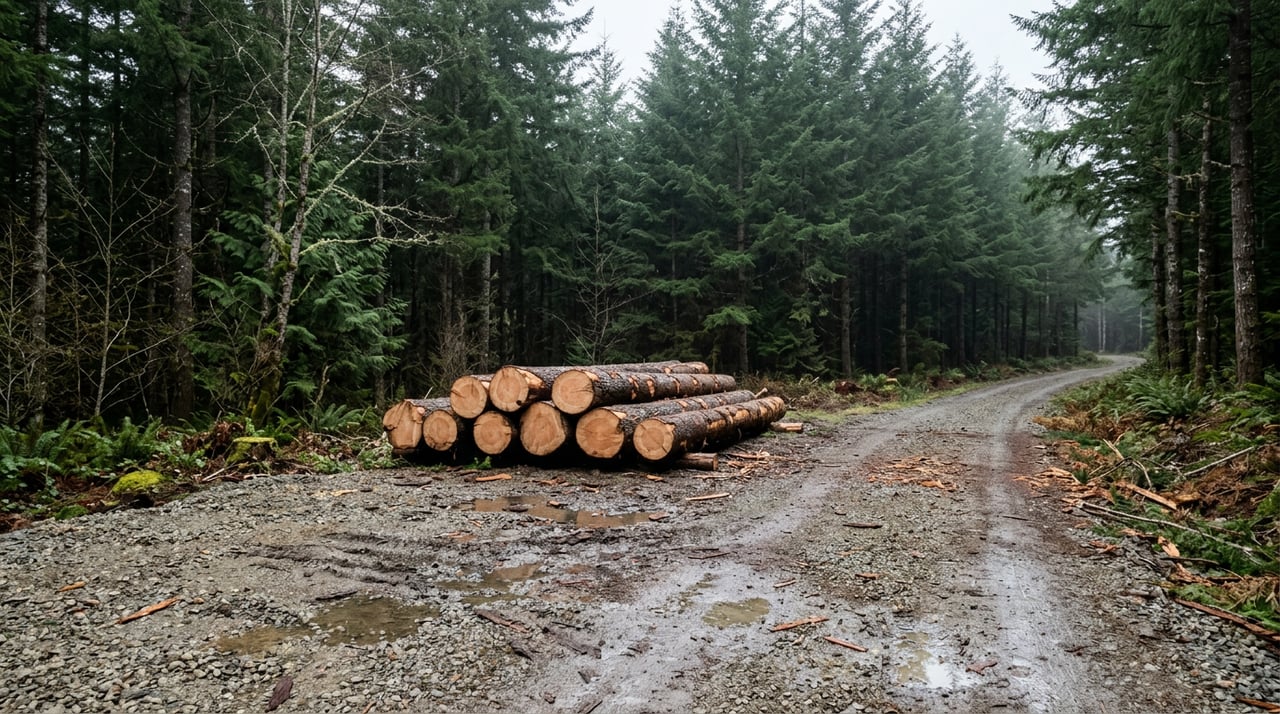
Thinking about buying a timber tract along the Umpqua and want to make sure it truly performs? You are not alone. Douglas County is one of Western Oregon’s most active timber markets, but productivity and profitability vary a lot from parcel to parcel. In this guide, you will learn the key factors that drive value, how to evaluate a tract’s timber potential, and what to check before you close. Let’s dive in.
Why Douglas County stands out
Douglas County is a powerhouse timber region with an estimated 2.6 to roughly 2.8 million acres of commercial forest. The OSU KnowYourForest resource lists about 2,616,000 acres of timberland countywide, and many overviews round up to about 2.8 million to reflect broader county-scale reporting. That size and diversity give you options across age classes, access, and site quality. You can see the county overview on KnowYourForest’s Douglas page for context.
Public lands also shape the market. Western Douglas County sits within the BLM’s O&C lands program, which manages a significant share of the region’s productive forest. The way those public lands are managed influences local timber supply and county payments, which in turn affects pricing signals for private owners. If you want the full backdrop, review the BLM’s O&C lands summary.
Forestry and wood products remain a major local employer and a core part of the economy. That means you will find an established mill network, experienced operators, and an active buyer pool. Learn more about forestry’s economic role from Oregon Forests’ statewide overview.
- Reference: KnowYourForest Douglas County overview
- Reference: BLM O&C lands program
- Reference: Forestry and local economy
What makes a tract productive
Species and forest types
Coast Douglas-fir is the primary commercial species in the Umpqua Basin. You will also see western hemlock and western redcedar in moister areas, mixed conifer and ponderosa on higher or drier ground, and alder or other hardwoods in riparian zones. Douglas-fir is typically your value driver because it yields strong sawtimber assortments and responds well to good sites. For a quick species primer, see Oregon Forests’ guide to Douglas-fir.
- Reference: Douglas-fir species overview
Site index and soils
Site index is the standard way foresters measure a site’s growth potential. It is the expected height of dominant trees at a reference age. In Douglas County, site index can swing widely based on elevation, aspect, and soil depth. Lower slopes and valley benches often grow timber faster, while shallow soils and ridgetops can slow things down. Ask your forester to take dominant-tree heights with age sampling to peg the site index by species using regional curves. USFS research provides the baseline methodology and regional guidance.
- Reference: USFS site index methods and curves
Age classes and stand structure
On private lands you will often encounter young and mid-rotation plantations that were reestablished after earlier harvests. Federal tracts tend to hold more older or reserve stands. The mix matters. Younger stands can set you up for long-term growth, while older, high-volume stands can support near-term harvest income. Always model both near-term and long-term scenarios when you underwrite a property.
Slope, water, and access
Deep, well-drained soils on moderate slopes usually deliver stronger yields and lower harvest costs. Steep terrain, sensitive riparian areas, and shallow soils can limit merchantable volume and raise road and logging costs. In Oregon, harvests and many road activities require notifications and must follow Forest Practices rules. You can browse ODF’s FERNS portal to understand how notifications and constraints show up on a given operation.
- Reference: ODF FERNS notification example
Mill access and market drivers
Local mill network
The Roseburg corridor anchors a dense processing footprint that includes independent sawmills and large regional manufacturers headquartered in the area. That network sets local delivered-log specifications and prices. As a buyer, map the nearest active mills, note their sort specs and procurement policies, and estimate realistic haul times. One example of an area operator is Douglas County Forest Products in Roseburg.
- Reference: Douglas County Forest Products listing
Public sales and market signals
BLM timber sales in the Roseburg and Coos Bay districts are regularly bid by major regional buyers. When those sales are competitive, it is a signal of active demand that can influence private stumpage and delivered-log pricing. Tracking the BLM and USFS sale pipeline helps you gauge supply and competition near your target tract. See a recent BLM sale example in Coos Bay for context on competition and volume.
- Reference: BLM Coos Bay timber sale news
Price benchmarks and volatility
Log and lumber prices are cyclical and can move quickly with housing and export demand. Industry filings by major timber companies point to benchmarks like TimberMart-South and Fastmarkets for pricing context. For a specific tract, rely on current delivered-log quotes from nearby mills, recent comps for similar stands, and a range of price scenarios. You can see how public companies discuss price cycles in their SEC filings.
Due diligence checklist before you buy
Use this as a field checklist and have a certified or consulting forester prepare a written report.
- Title and encumbrances
- Confirm timber rights, access easements, road-use agreements, and any split-estate issues.
- Check property tax programs. Many rural timber tracts qualify for Farm or Forest special assessment. Review Douglas County’s program rules and the potential additional tax liability if use changes.
- Reference: Douglas County Farm and Forest assessment
- Timber inventory and growth
- Commission a current timber cruise. Capture species mix, DBH classes, merchantable heights, product sorts, defect, and per-acre volume.
- Estimate site index using dominant-tree height and age samples. Calibrate growth with regional yield tools.
- Build a stand table by product class so you can model near-term and long-term harvests.
- Access, roads, and haul logistics
- Verify legal access from a public road to the tract and to each harvest unit.
- Document road ownership and maintenance obligations.
- Price likely road work and landings. Check for seasonal haul limits and permits.
- Reference: ODF FERNS notification example
- Environmental and regulatory constraints
- Identify fish-bearing streams, required buffers, wetlands, and unstable slopes.
- Screen for listed species habitat and timing limits that could affect harvest windows.
- Note adjacency to BLM or USFS lands, plus any road or access constraints tied to those neighbors. For regional context, review the BLM O&C program page.
- Reference: BLM O&C lands program
- Reforestation obligations
- Oregon’s Forest Practices rules require reforestation after harvest on private lands. Budget for site prep, seedlings, planting, and follow-up release work.
- Review the seller’s compliance history and any open notifications.
- Reference: ODF FERNS notification example
- Harvest economics test
- Build a simple model: expected volume by product and timing, delivered-log prices by mill, logging and road costs, reforestation, taxes, and a discount rate.
- Run soft, base, and strong price scenarios. Use local mill quotes first and check industry benchmarks for context as shown in public filings.
- Reference: Industry pricing benchmarks mentioned in SEC filings
- Contracts and surveys
- Order title insurance and a boundary survey if needed.
- Confirm there are no open timber sale contracts, conservation easements, or carbon agreements that limit your plans. If any exist, obtain full terms before you proceed.
Risk factors to plan for
Federal policy
Shifts in how O&C lands are managed can change the public-timber pipeline, which affects local mills and private stumpage competition. Keep an eye on BLM planning updates and county-level impacts so your pricing model reflects likely supply conditions.
- Reference: BLM O&C lands program
Wildfire and climate
Fire frequency and severity influence insurance costs, stand mortality risk, and management choices. Plan for fuels reduction, defensible space along roads, and active patrol during dry seasons. Oregon Forests’ resources discuss these growing considerations in forest planning.
- Reference: Forestry and local economy
Market cycles
Lumber and log prices follow housing starts, export demand, and broader supply shifts. Build a range of price cases and stress test your returns. For signal checks, watch public company filings, mill procurement notes, and public timber sale results.
How we help you buy with confidence
You get one shot to underwrite a timber property the right way. Made Out West Land Co. is a specialist rural and timberland brokerage serving Western Oregon, with multigenerational forestry expertise and a buyer-first approach. We focus on accurate timber valuation and clear risk reduction. That includes practical guidance on site index, age-class mix, access, and mill options in the Umpqua Basin.
When you are ready to act, our marketing stack and transaction formats help you move decisively. We support MLS listings across 60 plus channels, create detailed videos and lookbooks, and offer sealed-bid or pocket-listing strategies when privacy and price discovery matter. If you want a guided search process, our My Search Portal helps you track properties and save criteria so you see the right opportunities faster.
Place your dreams in our hands — reach out to David Brinker to talk through your goals for Douglas County timberland and get a practical plan for next steps.
FAQs
What is site index and why does it matter in Douglas County?
- Site index measures a site’s growth potential by estimating dominant tree height at a set age. In Douglas County, it varies with slope, elevation, and soil depth, so you should verify it on the specific parcel using field measurements and regional curves.
How do O&C public lands influence private timber buying near the Umpqua River?
- The BLM’s O&C lands affect regional timber supply and county revenues. Changes to public harvest levels can shift competition and pricing, so track BLM planning updates and local sale activity when modeling returns.
What should I review to confirm mill access and haul costs in the Umpqua Basin?
- Map active mills, confirm sort specs and procurement policies, and drive the haul route to time it. Add seasonal restrictions and road class to your model to avoid underestimating cost.
Do I need a new timber cruise if the seller provides one?
- If the seller’s cruise is dated or lacks detail on species, defect, and product sorts, commission a new cruise. Timber value depends on current measurements, not assumptions.
What reforestation obligations come with a private harvest in Oregon?
- Oregon requires replanting after most private harvests. Budget for site prep, seedlings matched to site, planting, and release work, and confirm the seller’s compliance history before you buy.
How should I model timber price risk for a Douglas County tract?
- Use local delivered-log quotes as your base, add comps for similar stands, and layer soft, base, and strong scenarios. Update your model as market conditions change and before major harvest decisions.